

This article was automatically translated from the original Turkish version.
+1 More
Yapay Zeka Tarafından Oluşturulmuştur.
Silence Spiral is a theory that explains the processes of public opinion formation, individuals’ tendencies to express their opinions, and the influence of mass media in these processes. Developed in 1974 by German political scientist Elisabeth Noelle-Neumann, this theory focuses on how public opinion is formed and the reasons behind shifts in public attitudes. According to its foundational premise, when new ideas enter public discourse, individuals observe others’ views before expressing their own. If individuals believe their opinions will be supported, they are inclined to speak; however, if they perceive their views as unsupported or likely to face opposition, they prefer to remain silent.【1】 In this process, those who speak appear to enjoy growing support for their views and become more courageous. When the increasing boldness of one side combines with the silence of the other, the phenomenon known as the "silence spiral" emerges. The theory emphasizes the power of mass media to suppress individuals and society or to embolden certain groups to speak.【2】
Elisabeth Noelle-Neumann studied the formation of public opinion in Germany before and during World War II, questioning why the German public adopted political positions that ultimately led to national defeat in the 1930s and 1940s. The empirical foundations of the theory are based on Noelle-Neumann’s observations during the German federal elections of 1965 and 1972. In the 1965 election, although support for the two major parties was closely matched, a dramatic shift in public perception occurred shortly before the vote, with growing expectations that the Christian Democrats would win. The final results resolved the tie, and voting trends shifted in line with these expectations. Noelle-Neumann explained this phenomenon not merely as a “bandwagon” effect but as a result of how individuals perceive the climate of opinion.【3】

Silence Spiral (Generated by Artificial Intelligence)
The Silence Spiral theory is based on five fundamental assumptions concerning social structure and individual psychology:
Threat of Social Exclusion: Society threatens to exclude individuals who deviate from general consensus or dominant values.【4】
Fear of Social Exclusion: Individuals live in constant fear of being excluded by society. This fear is emphasized as the primary element of the theory.【5】
Observing the Climate of Opinion (Quasi-Statistical Sense): Due to the fear of exclusion, individuals continuously observe and evaluate the prevailing opinion climate around them. Noelle-Neumann termed the process by which people intuitively sense shifts in public opinion the “quasi-statistical sense.”【6】
Influence on Behavior: The impressions gained from these observations affect individuals’ behavior within society, particularly their decisions to express or conceal their opinions.【7】
Formation of Public Opinion: These four assumptions together explain the formation, maintenance, and change of public opinion.【8】
The mechanism of the spiral depends on individuals’ perceptions of whether their views are generally accepted in public opinion. If an individual believes their opinion is widely accepted, they feel no hesitation in expressing it. However, if they perceive their views as diverging from the dominant opinion, they prefer to conceal them. Those who remain silent, feeling their views are in the minority or declining, become part of a “silent majority” to avoid social exclusion.【9】 The concept of "pluralistic ignorance" is also significant in this process. This refers to a situation in which a large group of people hold a mistaken belief about the direction and strength of public opinion, perceiving a reality that is the opposite of the truth. This misperception can lead individuals in the minority to feel comfortable speaking, while the majority remains silent.【10】 In the silence spiral process, fear is not limited to social isolation; individuals’ doubt in their own judgment is also identified as a factor that renders them vulnerable.【11】
Media plays a central role in the Silence Spiral theory. Individuals largely learn which opinions are accepted in society through mass media. Mass media shapes and reinforces perceptions of dominant ideas and emerging trends.【12】
The functions of media within the theory are as follows:
According to Noelle-Neumann, media—particularly television—plays a decisive role in shaping individuals’ perception of the opinion climate by creating uniformity and eliminating selective perception. Groups supported by the media become more willing to speak, while minorities facing hostile media attitudes fall silent.【16】
With the advancement of internet technologies in the 21st century, the Silence Spiral theory has also been examined in the context of online media. It has been suggested that the anonymity provided by the internet reduces the fear of exclusion, enabling users to express their opinions more freely.【17】 However, some studies indicate that the silence spiral remains valid in online environments. For example, a Pew Research Center study found that people are less willing to discuss controversial issues (such as the Snowden-NSA affair) on social media platforms like Facebook and Twitter than in face-to-face interactions. Individuals are more likely to share their opinions when they believe their social network peers agree with them.【18】 In online media, “filter bubbles” or homogeneous social networks can increase the willingness to speak by connecting individuals with others who share their views. However, online lynching campaigns and social pressure can also cause individuals to hesitate to reveal their true opinions.【19】

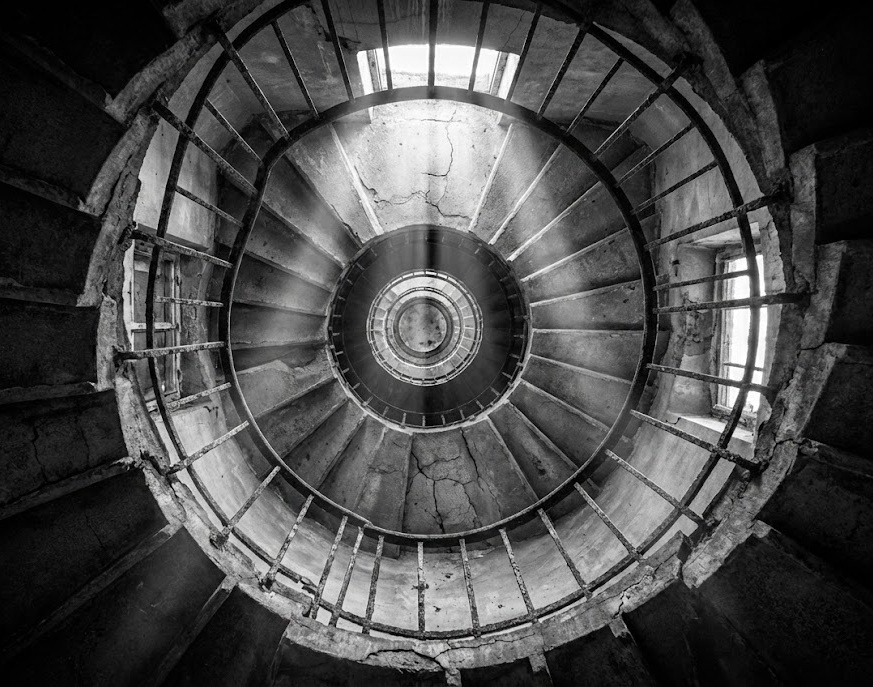
Spiral (Generated by Artificial Intelligence)
The Silence Spiral theory has faced various methodological and theoretical criticisms:
The Silence Spiral is a comprehensive social psychology and communication theory that posits individuals develop speaking or silent behaviors based on their perception of the prevailing opinion climate. Research indicates that while the theory has been studied less frequently than agenda-setting or framing, it provides plausible explanations for public opinion formation. The theory remains a vital reference point for examining social pressure, fear of exclusion, and conformity behaviors in both traditional mass media and new media environments.【23】
[1]
Banu Baybars Hawks, "Silence Spiral," İletişim Fakültesi Dergisi, 1,2. Access 15 January 2026.https://iupress.istanbul.edu.tr/journal/connectist/article/suskunluk-sarmali?id=818888
[2]
Banu Baybars Hawks, "Silence Spiral," İletişim Fakültesi Dergisi, 2,3. Access 15 January 2026.https://iupress.istanbul.edu.tr/journal/connectist/article/suskunluk-sarmali?id=818888
Haydar Gölbaşı, "Silence Spiral and Türkiye," The Journal of Academic Social Science 5, no. 58 (November 2017): 1. Access 15 January 2026.https://asosjournal.com/?mod=makale_tr_ozet&makale_id=34974
[3]
Banu Baybars Hawks, "Silence Spiral," İletişim Fakültesi Dergisi, 1,2,4,6. Access 15 January 2026.https://iupress.istanbul.edu.tr/journal/connectist/article/suskunluk-sarmali?id=818888
[4]
Süleyman İrvan, "Silence Spiral Theory and the Biography of Elisabeth Noelle-Neumann," İletişim Fakültesi Dergisi, 6. Access 15 January 2026. https://iupress.istanbul.edu.tr/journal/connectist/article/suskunluk-sarmali-kurami-ve-elisabeth-noelle-neumannin-ozgecmisi?id=801314
Haydar Gölbaşı, "Silence Spiral and Türkiye," The Journal of Academic Social Science 5, no. 58 (November 2017): 6. Access 15 January 2026.https://asosjournal.com/?mod=makale_tr_ozet&makale_id=34974
[5]
Süleyman İrvan, "Silence Spiral Theory and the Biography of Elisabeth Noelle-Neumann," İletişim Fakültesi Dergisi, 6. Access 15 January 2026. https://iupress.istanbul.edu.tr/journal/connectist/article/suskunluk-sarmali-kurami-ve-elisabeth-noelle-neumannin-ozgecmisi?id=801314
Haydar Gölbaşı, "Silence Spiral and Türkiye," The Journal of Academic Social Science 5, no. 58 (November 2017): 6. Access 15 January 2026.https://asosjournal.com/?mod=makale_tr_ozet&makale_id=34974
[6]
Süleyman İrvan, "Silence Spiral Theory and the Biography of Elisabeth Noelle-Neumann," İletişim Fakültesi Dergisi, 6. Access 15 January 2026. https://iupress.istanbul.edu.tr/journal/connectist/article/suskunluk-sarmali-kurami-ve-elisabeth-noelle-neumannin-ozgecmisi?id=801314
Banu Baybars Hawks, "Silence Spiral," İletişim Fakültesi Dergisi, 3. Access 15 January 2026.https://iupress.istanbul.edu.tr/journal/connectist/article/suskunluk-sarmali?id=818888
Haydar Gölbaşı, "Silence Spiral and Türkiye," The Journal of Academic Social Science 5, no. 58 (November 2017): 6. Access 15 January 2026.https://asosjournal.com/?mod=makale_tr_ozet&makale_id=34974
[7]
Süleyman İrvan, "Silence Spiral Theory and the Biography of Elisabeth Noelle-Neumann," İletişim Fakültesi Dergisi, 6. Access 15 January 2026. https://iupress.istanbul.edu.tr/journal/connectist/article/suskunluk-sarmali-kurami-ve-elisabeth-noelle-neumannin-ozgecmisi?id=801314
Haydar Gölbaşı, "Silence Spiral and Türkiye," The Journal of Academic Social Science 5, no. 58 (November 2017): 6. Access 15 January 2026.https://asosjournal.com/?mod=makale_tr_ozet&makale_id=34974
[8]
Haydar Gölbaşı, "Silence Spiral and Türkiye," The Journal of Academic Social Science 5, no. 58 (November 2017): 6. Access 15 January 2026.https://asosjournal.com/?mod=makale_tr_ozet&makale_id=34974
Süleyman İrvan, "Silence Spiral Theory and the Biography of Elisabeth Noelle-Neumann," İletişim Fakültesi Dergisi, 6. Access 15 January 2026. https://iupress.istanbul.edu.tr/journal/connectist/article/suskunluk-sarmali-kurami-ve-elisabeth-noelle-neumannin-ozgecmisi?id=801314
[9]
Banu Baybars Hawks, "Silence Spiral," İletişim Fakültesi Dergisi, 3. Access 15 January 2026.https://iupress.istanbul.edu.tr/journal/connectist/article/suskunluk-sarmali?id=818888
Haydar Gölbaşı, "Silence Spiral and Türkiye," The Journal of Academic Social Science 5, no. 58 (November 2017): 7. Access 15 January 2026.https://asosjournal.com/?mod=makale_tr_ozet&makale_id=34974
[10]
Banu Baybars Hawks, "Silence Spiral," İletişim Fakültesi Dergisi, 3,4. Access 15 January 2026.https://iupress.istanbul.edu.tr/journal/connectist/article/suskunluk-sarmali?id=818888
[11]
Banu Baybars Hawks, "Silence Spiral," İletişim Fakültesi Dergisi, 3. Access 15 January 2026.https://iupress.istanbul.edu.tr/journal/connectist/article/suskunluk-sarmali?id=818888
[12]
Süleyman İrvan, "Silence Spiral Theory and the Biography of Elisabeth Noelle-Neumann," İletişim Fakültesi Dergisi, 9. Access 15 January 2026. https://iupress.istanbul.edu.tr/journal/connectist/article/suskunluk-sarmali-kurami-ve-elisabeth-noelle-neumannin-ozgecmisi?id=801314
Haydar Gölbaşı, "Silence Spiral and Türkiye," The Journal of Academic Social Science 5, no. 58 (November 2017): 8. Access 15 January 2026.https://asosjournal.com/?mod=makale_tr_ozet&makale_id=34974
[13]
Süleyman İrvan, "Silence Spiral Theory and the Biography of Elisabeth Noelle-Neumann," İletişim Fakültesi Dergisi, 11. Access 15 January 2026. https://iupress.istanbul.edu.tr/journal/connectist/article/suskunluk-sarmali-kurami-ve-elisabeth-noelle-neumannin-ozgecmisi?id=801314
R. Özgün Kehya, "Online Media and Silence Spiral," SDÜ İFADE, 8. Access 15 January 2026 https://dergipark.org.tr/tr/pub/sduifade/article/569777
[14]
Haydar Gölbaşı, "Silence Spiral and Türkiye," The Journal of Academic Social Science 5, no. 58 (November 2017): 3,8. Access 15 January 2026.https://asosjournal.com/?mod=makale_tr_ozet&makale_id=34974
R. Özgün Kehya, "Online Media and Silence Spiral," SDÜ İFADE, 9. Access 15 January 2026 https://dergipark.org.tr/tr/pub/sduifade/article/569777
[15]
Banu Baybars Hawks, "Silence Spiral," İletişim Fakültesi Dergisi, 393-400. Access 15 January 2026.https://iupress.istanbul.edu.tr/journal/connectist/article/suskunluk-sarmali?id=818888
[16]
Süleyman İrvan, "Silence Spiral Theory and the Biography of Elisabeth Noelle-Neumann," İletişim Fakültesi Dergisi, 9,14,27. Access 15 January 2026. https://iupress.istanbul.edu.tr/journal/connectist/article/suskunluk-sarmali-kurami-ve-elisabeth-noelle-neumannin-ozgecmisi?id=801314
[17]
R. Özgün Kehya, "Online Media and Silence Spiral," SDÜ İFADE, 1,12,15. Access 15 January 2026 https://dergipark.org.tr/tr/pub/sduifade/article/569777
[18]
R. Özgün Kehya, "Online Media and Silence Spiral," SDÜ İFADE, 4,13,14. Access 15 January 2026 https://dergipark.org.tr/tr/pub/sduifade/article/569777
[19]
R. Özgün Kehya, "Online Media and Silence Spiral," SDÜ İFADE, 14. Access 15 January 2026 https://dergipark.org.tr/tr/pub/sduifade/article/569777
Haydar Gölbaşı, "Silence Spiral and Türkiye," The Journal of Academic Social Science 5, no. 58 (November 2017): 9. Access 15 January 2026.https://asosjournal.com/?mod=makale_tr_ozet&makale_id=34974
[20]
Banu Baybars Hawks, "Silence Spiral," İletişim Fakültesi Dergisi, 5. Access 15 January 2026.https://iupress.istanbul.edu.tr/journal/connectist/article/suskunluk-sarmali?id=818888
[21]
Banu Baybars Hawks, "Silence Spiral," İletişim Fakültesi Dergisi, 4. Access 15 January 2026.https://iupress.istanbul.edu.tr/journal/connectist/article/suskunluk-sarmali?id=818888
[22]
Süleyman İrvan, "Silence Spiral Theory and the Biography of Elisabeth Noelle-Neumann," İletişim Fakültesi Dergisi, 15,18. Access 15 January 2026. https://iupress.istanbul.edu.tr/journal/connectist/article/suskunluk-sarmali-kurami-ve-elisabeth-noelle-neumannin-ozgecmisi?id=801314
Haydar Gölbaşı, "Silence Spiral and Türkiye," The Journal of Academic Social Science 5, no. 58 (November 2017): 1,4. Access 15 January 2026.https://asosjournal.com/?mod=makale_tr_ozet&makale_id=34974
[23]
Banu Baybars Hawks, "Silence Spiral," İletişim Fakültesi Dergisi, 2,6. Access 15 January 2026.https://iupress.istanbul.edu.tr/journal/connectist/article/suskunluk-sarmali?id=818888
R. Özgün Kehya, "Online Media and Silence Spiral," SDÜ İFADE, 1. Access 15 January 2026 https://dergipark.org.tr/tr/pub/sduifade/article/569777

Yapay Zeka Tarafından Oluşturulmuştur.
No Discussion Added Yet
Start discussion for "Silence Spiral (Spiral of Silence)" article
Historical Background and Emergence
Core Assumptions of the Theory
Mechanism of the Silence Spiral
Role of Mass Media
Online Media and the Silence Spiral
Critiques and Debates
Impact and Validity of the Theory